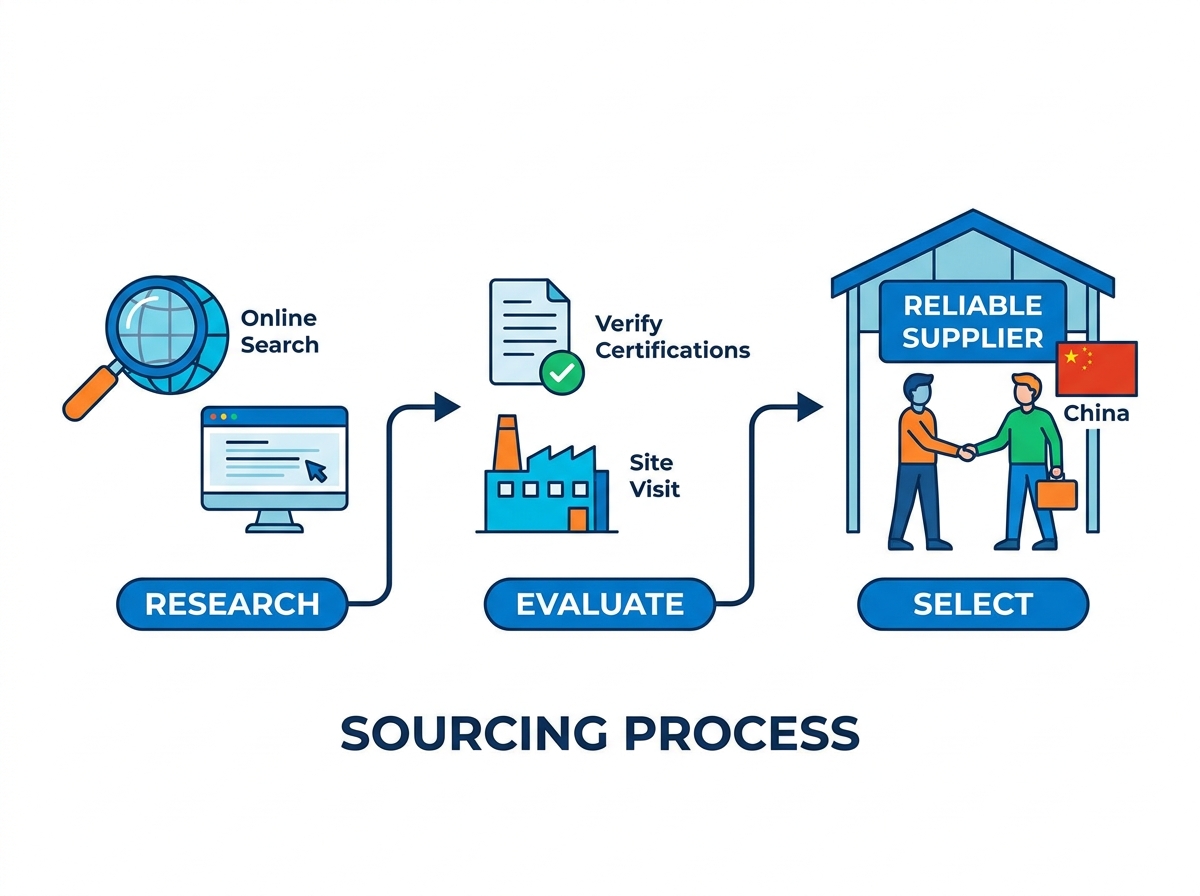
International steel procurement carries massive stakes. Selecting the wrong fabrication partner leads to structural failures, site delays, and severe compliance penalties. Navigating the fragmented Chinese steel fabrication market presents a complex challenge for overseas buyers. You must distinguish between genuine, high-capacity fabricators and middlemen who lack strict quality control over complex engineering requirements. This guide provides a systematic, evidence-based framework for vetting, auditing, and partnering with a qualified steel structure supplier China. We will cover how to align your procurement strategy with international engineering standards, project-specific risk profiles, and overseas logistics requirements.
Identify the Entity Type: Clearly distinguish between direct fabricators, trading companies, and EPC (Engineering, Procurement, and Construction) contractors to align with your project management capabilities.
Mandate Verifiable Certifications: Treat international welding and fabrication certifications (e.g., AISC, EN 1090, ISO 3834, AS/NZS 1554) as non-negotiable baseline requirements.
Demand Traceability: Require comprehensive Quality Assurance (QA) documentation, including Mill Test Certificates (MTC) for raw materials and in-house Non-Destructive Testing (NDT) reports.
Mitigate Supply Chain Risk: Utilize third-party inspectors (e.g., SGS, TÜV) for factory audits, verify overseas project track records, and structure payment terms around verifiable production milestones.
Defining Your Project Scope and Supplier Requirements
Framing the Success Criteria
Establish strict technical parameters before initiating supplier outreach. This prevents mismatched capabilities and inaccurate quoting. A vague request for quotation yields unreliable estimates. Define your exact structural loads, environmental conditions, and material grades upfront. Clear parameters allow you to filter out unqualified workshops immediately. Suppliers can only provide accurate timelines and technical support when they understand the precise engineering demands of your project. You need to specify dead loads, live loads, wind speeds, and seismic zone requirements. Providing a comprehensive design brief ensures the factory engineering team evaluates the actual constructability of your design.
Standard Prefab vs. Custom Steel Structure Supplier
Evaluating suppliers requires understanding the difference between standardized modular builds and highly engineered architecture. Standard warehouses and sheds rely on repetitive frames and basic connections. Most mid-tier workshops handle these basic requirements easily. They use standard templates and automated welding lines for simple H-beams.
Custom architectural structures demand advanced engineering capabilities. You must partner with a qualified custom steel structure supplier for these complex builds. They must utilize advanced detailing software like Tekla Structures or AutoCAD. These programs ensure precision in complex node connections and non-standard geometries. Verify their in-house detailing team's experience with 3D modeling and clash detection. A factory that only works in 2D CAD will struggle with spatial coordination on complex multi-story or curved structures.
Capacity Requirements for a Large Span Steel Structure Supplier
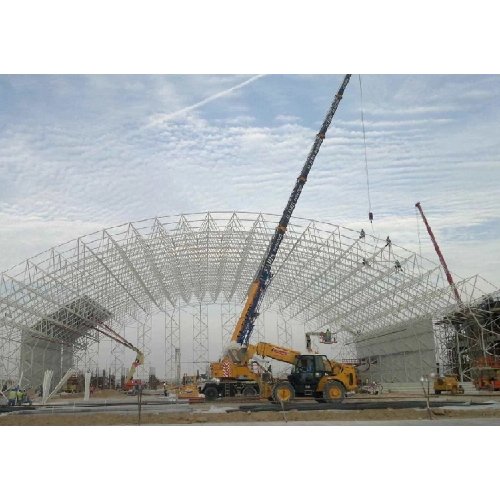
Large-span projects like stadiums, aircraft hangars, and heavy industrial plants require specific factory infrastructure. Standard workshops cannot fabricate or maneuver massive steel trusses. You need a dedicated large span steel structure supplier with heavy-duty capabilities. Look for these specific operational assets during your evaluation:
Heavy-duty overhead cranes capable of lifting 50 to 100 tons safely.
Large-scale pre-assembly yards to test-fit massive trusses before shipping.
Advanced CNC drilling and cutting machines for oversized H-beams and box columns.
In-house heavy plate rolling machines for cylindrical columns or curved roof members.
Primary Frame vs. Complete Building Envelope
Determine your exact procurement scope early in the planning phase. Some projects require only the primary structural steel skeleton. In this case, you source secondary framing and cladding locally. Other projects demand a complete turnkey package. This includes the primary frame, secondary purlins, roof panels, wall cladding, insulation, doors, and windows. Ensure your chosen factory has reliable supply chains for these secondary components if you opt for a complete envelope. Buying the entire envelope from one source reduces compatibility issues on site, but you must verify the quality of their secondary material suppliers.
Compliance and Regional Building Codes
Matching supplier capabilities with local regulatory codes is non-negotiable. A factory experienced in Chinese domestic standards (GB) may not understand international requirements. European projects require EN 1090 certification and CE marking for structural steelwork. North American projects demand adherence to ASTM material standards and AISC fabrication codes. Australasian builds must comply with AS/NZS welding and steel standards. Always verify that the factory has successfully exported to your specific regulatory region. Ask for past project documentation showing compliance with your local building authority.
Categorizing the Chinese Steel Structure Market
Solution Categories
The Chinese market features various vendor types. Breaking down these categories helps buyers choose the right partnership model for their specific project management capabilities. Understanding who you are dealing with prevents miscommunication and supply chain bottlenecks.
Comparison of Steel Structure Vendor Types in China
Vendor Type
Primary Advantage
Primary Disadvantage
Best Suited For
Direct Manufacturer
Maximum cost control and direct factory communication.
Requires intense buyer oversight and logistics management.
Experienced buyers with in-house QA/QC teams.
EPC Contractor
Turnkey design, fabrication, and installation management.
Higher premium costs and potential subcontracting risks.
Complex, large-scale industrial or commercial projects.
Trading Company
Consolidates multiple building materials into one shipment.
Margin stacking and diluted accountability for quality.
Small projects requiring diverse, low-volume materials.
Direct Steel Structure Manufacturer China
Working with a steel structure manufacturer China offers direct control over production. You communicate directly with the factory floor engineers. This eliminates middleman markups, resulting in lower overall costs. You can implement your own quality control checkpoints directly on the assembly line.
However, this route requires substantial effort from the buyer. You must manage international logistics, container loading plans, and export customs procedures. It also demands intensive quality oversight. You will likely need to hire third-party inspectors to monitor the fabrication process continuously. If you lack an internal procurement team, managing a direct manufacturer becomes overwhelming.
EPC Steel Structure Contractor
An EPC steel structure contractor provides comprehensive turnkey solutions. They handle architectural design, structural engineering, factory fabrication, and international installation supervision. This minimizes the management burden on your internal team. They take full responsibility for the project lifecycle.
The primary drawback is the higher premium cost associated with turnkey management. Additionally, you must conduct strict due diligence. Verify that the EPC contractor actually owns the primary fabrication facilities. Some EPC firms subcontract fabrication to lower-tier workshops, which compromises quality control. Always demand a physical tour of their owned manufacturing plants.
Sourcing Agents and Trading Companies
Sourcing agents and trading companies act as intermediaries. They are appropriate for smaller projects or buyers lacking internal procurement resources. They excel at consolidating multiple building materials like steel, glass, and HVAC systems into single shipments.
The risks include margin stacking, which inflates your costs. Accountability becomes diluted. If a structural component fails on-site, the trading company may blame the factory, leaving you without a direct resolution. Avoid trading companies for highly engineered, large-span structural projects where direct technical communication is mandatory.
Core Evaluation Dimensions for a Steel Structure Supplier in China
Assessing Export Experience and Overseas Project Portfolios
A supplier's domestic success does not guarantee international competence. Request detailed case studies of completed projects in your specific country or region. Ask for reference contacts and follow up with past clients. Inquire about the supplier's communication responsiveness and post-delivery support.
Verify their practical experience in navigating regional requirements. They must understand specific climate loads, such as heavy snow loads in Northern Europe or seismic zone detailing in California. They also need proven experience passing local compliance audits and customs inspections. A supplier familiar with your local port regulations will prevent costly demurrage charges.
Verifying International Certifications and Welding Standards
Certifications prove a factory's commitment to standardized quality. Do not accept photocopies at face value. Verify the authenticity of ISO 9001, AISC, and CE marks directly with the issuing bodies. Check the expiration dates on all certificates.
Welding quality dictates structural integrity. Check the specific qualifications of individual welders on the factory floor. Demand proof of AWS D1.1 or EN ISO 9606-1 certified welders. Ensure the factory maintains a documented Welding Procedure Specification (WPS) for every joint type required in your project. The WPS dictates the exact voltage, wire feed speed, and shielding gas used for each weld.
Audit the factory's physical equipment and production lines. A reliable steel structure fabrication supplier must possess modern, automated machinery. Look for CNC plasma cutting machines, automated H-beam assembly lines, and enclosed shot blasting machinery.
Evaluate their actual production capacity. Compare the factory's maximum monthly tonnage capacity against their current committed backlog. A factory claiming 5,000 tons per month is useless if they are already booked for the next six months. Verify this data to ensure realistic lead times for your project. Ask for their current production schedule and identify where your project fits into their timeline.
Raw Material Traceability and Mill Test Certificates (MTC)
Structural integrity begins with raw steel quality. You must trace steel grades directly back to reputable Chinese steel mills like Baosteel or Ansteel. Ensure the Chinese grade Q355B/C/D accurately matches your required S355 or A572 Gr50 specifications.
Common Structural Steel Grade Equivalents
Chinese Standard (GB)
American Standard (ASTM)
European Standard (EN)
Yield Strength (MPa)
Q235B
A36
S235JR
235
Q355B
A572 Gr50
S355JR
345 - 355
Q355D
A572 Gr50 (Impact Tested)
S355J2
345 - 355
Q460C
A572 Gr65
S460N
460
Demand Mill Test Certificates (MTC) for every batch of steel used. The MTC must show the chemical composition and mechanical properties of the heat number stamped on the steel. Maintain this traceability documentation throughout the entire fabrication process.
Quality Control (QC) and Non-Destructive Testing (NDT) Protocols
Visual inspection is insufficient for structural welds. Define acceptable in-house testing capabilities before signing a contract. The factory must perform Non-Destructive Testing (NDT) on critical welds.
Ultrasonic Testing (UT) for full penetration welds to detect internal flaws.
Magnetic Particle Testing (MT) for surface crack detection on ferromagnetic materials.
Radiographic Testing (RT) for critical tension joints requiring permanent film records.
Penetrant Testing (PT) for non-magnetic materials or tight geometries.
Require a documented Inspection and Test Plan (ITP) prior to production. The ITP outlines exactly when, where, and how each component will be tested. It establishes hold points where fabrication cannot proceed until an inspector signs off on the previous step.
Cost vs. Value: Understanding Pricing Trade-offs
Value Engineering and Technical Support During Quotation
Top-tier suppliers provide engineering optimization during the quoting phase. They do not just blindly price your drawings. They apply value engineering to reduce unnecessary steel tonnage without compromising structural integrity. They might suggest alternative connection designs that are faster to fabricate and easier to erect on-site. This technical support adds massive value and reduces your overall project costs safely. A supplier that simply returns a price per ton without asking technical questions is likely a middleman.
Raw Steel Price Fluctuations and Index Linking
The Chinese domestic steel market experiences significant volatility. Understand how to structure quotes to account for these fluctuations. Standard quotations usually carry a short validity period, often just 7 to 14 days.
For long-term projects, negotiate material price escalation clauses. Link the contract price to a recognized Chinese steel index. This protects both you and the supplier. It prevents the factory from cutting corners on quality if raw material prices suddenly spike after the contract is signed. Establish a baseline steel price in the contract and agree on a percentage threshold that triggers a price adjustment.
Surface Treatment Costs and Longevity
Surface treatment directly impacts the lifespan of your building. Compare the upfront costs and lifecycle value of different systems. Hot-Dip Galvanizing (HDG) costs more initially but provides superior, maintenance-free corrosion protection for decades. Multi-layer epoxy and polyurethane painting systems cost less upfront but require future maintenance.
Highlight the environmental compliance of the supplier's painting facilities. China strictly enforces environmental regulations. Factories with non-compliant, open-air painting operations face sudden government shutdowns. Ensure your supplier uses enclosed, environmentally certified painting booths to avoid production delays. Ask to see their local environmental impact assessment (EIA) approval.
Shipping, Logistics, and Incoterms
Logistics consume a massive portion of your budget. Evaluate the complexities of packing oversized steel members. Standard 40ft OT (Open Top) or HQ (High Cube) containers are cost-effective but limit component sizes. Break-bulk shipping accommodates massive trusses but costs significantly more and requires specialized port handling.
Recommend appropriate Incoterms based on your freight forwarding capabilities. FOB (Free On Board) gives you control over ocean freight costs and shipping lines. CIF (Cost, Insurance, and Freight) pushes the shipping responsibility to the supplier but may result in hidden markups on the freight rate. Always request a preliminary container loading plan during the quotation phase to estimate shipping volumes accurately.
Implementation Risks and Mitigation Strategies
Managing Technical Translation and Communication Gaps
Language barriers lead to misinterpreting structural drawings. A misunderstood node connection can halt your entire site erection. Mandate bilingual detailing drawings. Every component mark, weld symbol, and material grade must be clearly labeled in both English and Chinese.
Establish a single point of contact with an engineering background. Do not rely on standard sales representatives for technical clarifications. You need an English-speaking project manager who understands structural engineering terminology and can communicate directly with the detailing team. Schedule weekly video calls to review 3D models and address technical queries in real-time.
Installation Support and Erection Documentation
Factory fabrication is only half the battle. Seamless on-site assembly requires comprehensive erection documentation. Demand detailed erection drawings and interactive 3D Tekla models. Every steel member must feature a clear, weather-resistant component numbering system. Hard stamping or welding the numbers is superior to painted marks that fade during transit.
Discuss options for dispatching factory engineers to your site. A reliable steel structure contractor China can send experienced site supervisors to guide your local installation crews. This ensures the frame goes up safely, accurately, and strictly according to the design intent. They can troubleshoot minor fit-up issues on site immediately.
Conducting Third-Party Factory Audits
Never rely solely on factory-provided photos. Hire independent inspection agencies like SGS, TÜV, or Bureau Veritas. Implement a strict three-phase audit process to protect your investment.
Pre-qualification Audit: Verify factory licenses, equipment condition, and ISO compliance before signing any contracts.
Mid-production Inspection: Check material thickness, weld quality, and dimensional tolerances during active fabrication.
Pre-shipment Loading Supervision: Ensure components are packed securely to prevent transit damage and verify container quantities match the packing list.
Structuring Payment Terms and Performance Guarantees
Standard payment structures balance risk between buyer and seller. A common framework is a 30% T/T (Telegraphic Transfer) advance payment to secure raw materials. The remaining 70% T/T is paid before shipment, but strictly after the third-party inspection report is approved.
For large-scale, high-value contracts, utilize Letters of Credit (L/C). An irrevocable L/C protects both parties. It guarantees payment to the factory only when they present compliant shipping and quality documents to the bank. Define clear penalty clauses for late delivery within the contract. Tie these penalties to specific weekly delays to incentivize on-time completion.
Conclusion
Finalize your structural drawings and precise load calculations with a local engineer.
Define your local compliance requirements and acceptable material equivalents in a formal specification document.
Draft a standardized Request for Quotation (RFQ) detailing your exact NDT, surface treatment, and packing requirements.
Engage a reputable third-party inspection agency in China to prepare for initial factory audits.
FAQ
Q: How do I verify a Chinese steel supplier's ISO or AISC certification?
A: Never accept a PDF copy as definitive proof. Locate the certification number and the issuing body's name on the document. Visit the official website of the issuing organization and input the certificate number into their verification database. You can also email the issuing body directly to confirm the certificate is currently active and covers the specific factory location.
Q: What is the difference between Q355B and ASTM A572 Gr50?
A: Q355B is a Chinese standard low-alloy high-strength structural steel. It acts as the equivalent to the American ASTM A572 Gr50 and the European S355JR. They share similar yield strengths around 345 to 355 MPa. You must submit the Chinese Mill Test Certificates to your local structural engineer to ensure the specific chemical composition meets your local building code requirements.
Q: Why do some factories refuse to provide Mill Test Certificates (MTC)?
A: Reputable factories always provide an MTC. If a supplier refuses or delays providing one, they are likely purchasing inferior, non-standardized steel from unverified local scrap mills to cut costs. An MTC guarantees the steel's chemical composition and mechanical strength. Walk away from any supplier that cannot provide full material traceability.
Q: Can a Chinese factory design the building for me?
A: Yes, many large-scale fabricators have in-house engineering departments capable of structural design. Their designs typically default to Chinese GB standards. If you require the design to meet Eurocode or AISC standards, you must explicitly state this. You still need a locally licensed engineer in your country to review and stamp the final drawings for permit approval.
Q: How are oversized steel trusses shipped internationally?
A: Oversized trusses exceeding the dimensions of standard 40ft High Cube or Open Top containers ship via break-bulk cargo. Alternatively, factories design the trusses with bolted splice connections. This allows massive spans to be fabricated in smaller sections, packed into standard shipping containers, and bolted together on your construction site, saving massive freight costs.
Q: What is an Inspection and Test Plan (ITP)?
A: An ITP is a mandatory quality assurance document outlining every inspection checkpoint throughout the fabrication process. It details what is being tested, the testing method, the acceptance criteria, and who is responsible for signing off. You must approve the ITP before the factory cuts any steel to ensure all quality expectations are aligned.
A comprehensive steel structure company integrating processing design, installation, and technical services.
About Lianfang
Is a comprehensive steel structure company integrating processing design, installation and technical services of grids, steel structures, pipe trusses and spherical grids.