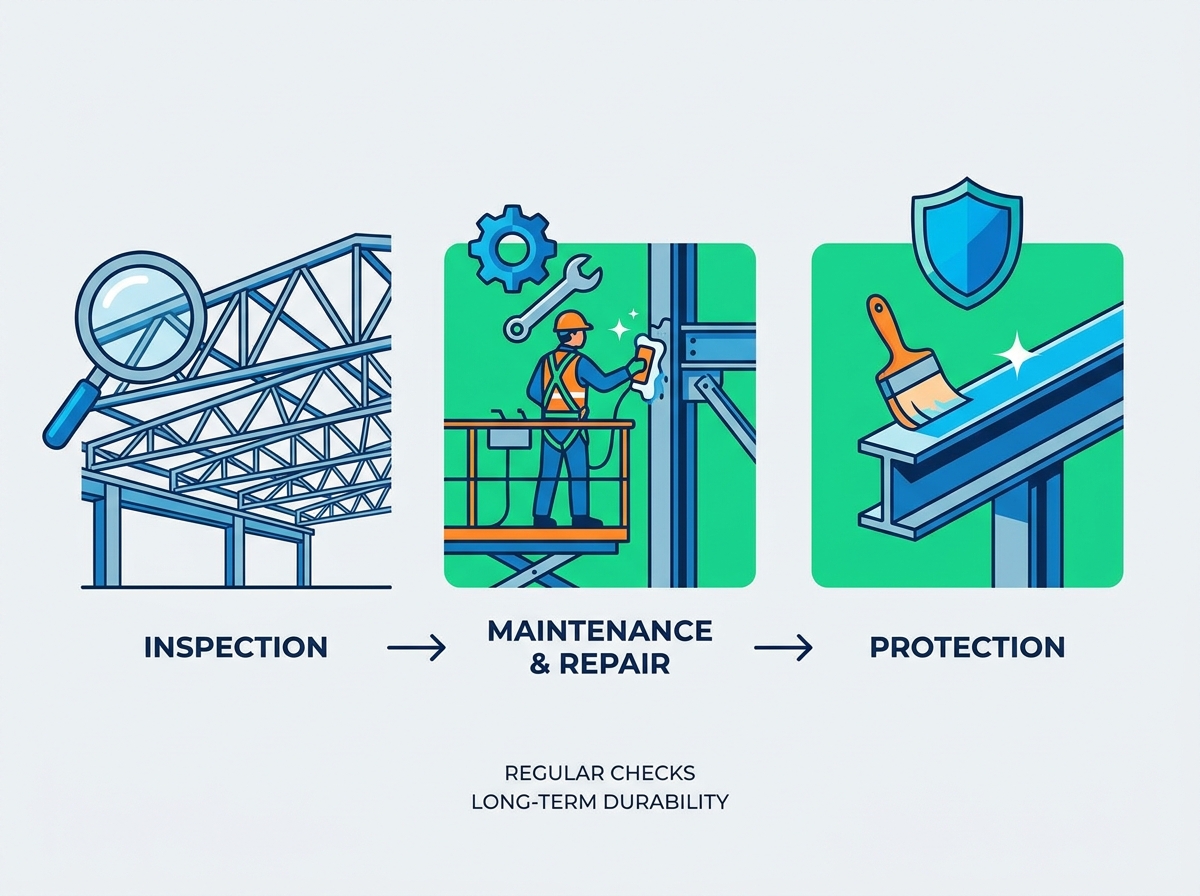
Deferred maintenance on industrial and commercial steel roofs rapidly accelerates asset degradation. Minor surface issues quickly turn into catastrophic structural failures and operational downtime. Facility managers must balance the harsh realities of environmental exposure—thermal cycling, galvanic corrosion, and wind uplift—with the need to maintain structural integrity without disrupting daily operations. Establishing a systematic, evidence-based approach to inspection, corrosion mitigation, and targeted remediation is necessary. This strategy maximizes the lifecycle of steel roofing assets and optimizes capital expenditure. We need to move away from reactive patching. By predicting failure points before they impact the building envelope, you ensure structural components perform within their engineered tolerances. This safeguards both the physical asset and the operations housed beneath it.
Baseline Frequency: Rigorous, documented inspections must occur bi-annually and immediately following severe weather events to establish a reliable baseline of structural health.
Specialized Engineering Needs: Complex architectural designs require specialized protocols; space frame and large span roof maintenance involve assessing node connections and deflection limits beyond standard panel checks.
Proactive Mitigation: Effective steel structure corrosion protection is a continuous lifecycle management process, heavily reliant on early detection, debris management, and the strategic reapplication of industrial coatings.
Risk Transfer: Partnering with a certified steel structure maintenance contractor mitigates severe safety liabilities and ensures compliance with OSHA and industry-standard engineering tolerances.
The Business Case for Proactive Steel Structure Roof Maintenance
Defining maintenance success requires looking through the lenses of maximized Return on Investment (ROI), zero unplanned operational disruption, and strict adherence to safety and environmental compliance. A reactive approach to roof management inevitably leads to emergency interventions. These carry premium labor rates and often require halting internal operations. Implementing a scheduled steel structure roof maintenance program transforms unpredictable capital shocks into manageable, predictable operational expenses. This proactive stance ensures that the structural envelope continuously meets its original design specifications.
Steel roofs face a relentless barrage of environmental and mechanical stressors. Thermal movement is a primary driver of component fatigue. As steel panels heat up under direct solar radiation and cool rapidly overnight, the resulting expansion and contraction place immense shear stress on mechanical fasteners and panel seams. Over time, this movement elongates fastener holes and degrades elastomeric seals. Wind uplift forces create negative pressure zones, particularly at roof corners and perimeters. This threatens to detach panels if clips and fasteners are compromised. Furthermore, UV degradation breaks down factory-applied protective finishes, while chemical exposure from industrial exhaust stacks or coastal salt spray accelerates the breakdown of galvanized coatings.
The financial disparity between routine preventative maintenance and emergency structural remediation or total roof replacement is staggering. Routine cleaning, localized sealant application, and fastener retightening cost a fraction of a full tear-off and replacement. When moisture breaches the external envelope, it saturates internal insulation, reducing its R-value and increasing HVAC loads. Prolonged moisture exposure then attacks the secondary structural members, such as purlins and girts, requiring complex structural retrofitting.
A typical failure cascade follows a predictable pattern if left unaddressed:
Initial Sealant Degradation: UV exposure and thermal cycling dry out neoprene washers and butyl tapes at panel laps.
Micro-Movement and Fastener Back-out: Expansion and contraction force screws upward, breaking the weather-tight seal.
Moisture Intrusion: Water enters the building envelope during rain events, saturating the fiberglass insulation below.
Secondary Structural Corrosion: Trapped moisture attacks the steel purlins and girts from the inside out, compromising load capacity.
Catastrophic Failure: High winds or heavy snow loads exploit the weakened structural members, leading to localized collapse or panel blow-off.
Developing a Rigorous Steel Roof Inspection Framework
Frequency, Timing, and Documentation Protocols
Establishing standard bi-annual schedules is the foundation of a sound steel roof inspection program. Conducting these assessments in the Spring and Fall allows facility teams to evaluate damage sustained during harsh winter conditions and prepare the envelope for the thermal extremes of summer. These scheduled walkthroughs provide a consistent timeline for tracking the degradation of sealants and coatings.
In addition to scheduled assessments, implementing mandatory post-event protocols is non-negotiable. Following high winds, hail storms, or heavy snow accumulation, the roof must be evaluated immediately. High winds can compromise edge flashings and loosen panel clips. Heavy snow loads can push the structural frame near its deflection limits, potentially causing permanent deformation. Hail impacts often create micro-fractures in the protective coating, exposing the raw steel underneath to rapid oxidation.
Maintaining a centralized digital log of all inspection findings is critical for long-term asset management. This database should include high-resolution photographic evidence, drone footage, historical repair data, and specific GPS coordinates for localized damage. A robust digital record allows engineers to track the progression of surface rust, evaluate the performance life of applied sealants, and make data-driven decisions regarding when to transition from localized repairs to full-scale retrofitting.
Exterior Envelope and Panel Assessments
The exterior inspection begins with a meticulous evaluation of mechanical fasteners. Thermal cycling causes screws to back out gradually. Inspectors must look for missing screws, stripped threads in the underlying purlins, and degraded neoprene washers. When a washer dries out, cracks, or is over-driven and deformed, it creates a direct pathway for water intrusion at every penetration point across the roof surface.
Visual inspections must identify surface-level physical damage that acts as a catalyst for rust. Dents, scratches, and abrasions caused by hail, dropped tools from HVAC technicians, or wind-blown debris compromise the factory finish. Assess the metal panels for deflection, oil canning, micro-fractures, and peeling paint. Oil canning, while sometimes an aesthetic issue, can indicate underlying stress from improper installation or excessive thermal movement.
Evaluating the integrity of standing seams, lap joints, and penetration flashings is a high-priority task. Penetrations for HVAC units, skylights, and plumbing vents are the most common sources of leaks. Inspectors must check the condition of pitch pockets, curb flashings, and the elastomeric sealants bridging the gap between the metal roof and the penetrating element. Additionally, thermal management components require close scrutiny. Expansion joints, sliding clips, and thermal blocks must function correctly to accommodate natural expansion and contraction without tearing the metal or shearing the clips.
Drainage System Efficiency
Water ponding accelerates coating degradation and adds significant dead load to the structural frame. Inspecting gutter systems, downspouts, and internal drains for blockages is a fundamental maintenance task. Leaves, industrial debris, and even bird nests can quickly clog drainage pathways, forcing water to back up under roof panels and flashings.
Evaluate the structural integrity of gutter brackets and the impact of ice damming on roof edges. In cold climates, poor attic insulation allows heat to escape, melting snow on the upper roof which then refreezes at the colder eaves. This ice damming forces water upward against the flow of the roof, penetrating lap joints and standing seams. Gutter brackets must be checked for corrosion and secure attachment, as the weight of ice and standing water can easily tear a compromised gutter away from the fascia.
Interior and Specialized Structural Assessments
An effective inspection does not stop at the exterior surface. Checking the attic or ceiling plenum is vital for detecting early signs of moisture intrusion. Look for water stains on the underside of the roof deck, condensation buildup on structural members, and degraded or compressed fiberglass insulation. High interior humidity levels combined with poor ventilation often lead to condensation on the cold steel surfaces, initiating rust from the inside out.
Executing large span roof maintenance requires specialized attention to structural load distribution. Inspectors must monitor the system for excessive deflection, evaluate the integrity of purlins and girts for twisting or web buckling, and check the tension of bracing rods. Large clear spans are highly susceptible to wind uplift and unbalanced snow loads, making the verification of structural geometry critical.
Similarly, space frame roof maintenance involves highly specialized protocols. The three-dimensional structural grid relies on the integrity of its spherical node connections. Inspections must include bolt torque verification at critical nodes, assessing the spatial grid for localized buckling, and checking for stress fractures in the tubular members. Because space frames distribute loads across multiple pathways, a failure at a single node can alter the stress distribution of the entire roof, necessitating precise, engineering-led evaluations.
Core Strategies for Steel Structure Corrosion Protection
Identifying and Categorizing Surface Degradation
Not all rust requires the same remediation approach. Differentiating between superficial surface rust, galvanic corrosion, and structural pitting is the first step in formulating a steel structure corrosion protection plan. Superficial rust often appears as a light orange oxidation on the surface of the panel, usually resulting from minor scratches or degraded paint. While aesthetically displeasing, it has not yet compromised the structural thickness of the steel.
Galvanic corrosion occurs when dissimilar metals come into contact in the presence of an electrolyte. For example, copper runoff from HVAC condensate lines dripping onto a galvanized steel roof will rapidly eat through the zinc coating and destroy the steel panel. Structural pitting is the most severe form of degradation, characterized by deep craters and a measurable loss of metal mass. Pitting significantly reduces the load-bearing capacity of the panel and often requires complete replacement.
Evaluating the condition of existing factory finishes, such as Polyvinylidene Fluoride (PVDF) or Silicone-Modified Polyester (SMP), alongside the underlying galvanized or Galvalume layers, dictates the required surface preparation. If the factory finish is chalking or peeling but the metallic coating remains intact, a simple cleaning and recoating may suffice. If the metallic layer is breached, aggressive rust inhibitors are required.
Cleaning, Debris, and Environmental Management
Proactive environmental mitigation extends the life of the roof coating. Trimming overhanging tree branches prevents physical scratching of the roof panels during high winds. Vegetation also deposits leaves, moss, and algae onto the roof surface. This organic matter retains moisture directly against the steel, creating a localized micro-climate that accelerates coating failure and oxidation.
Establishing protocols for the safe removal of dirt and industrial particulates is essential. Manufacturing facilities often emit airborne pollutants that settle on the roof, combining with dew to form acidic compounds that etch the metal finish. Regular cleaning removes these corrosive agents.
Selecting appropriate, non-abrasive cleaning agents and utilizing low-pressure washing techniques are critical. High-pressure power washing can strip away chalking factory finishes, damage elastomeric sealants, and force water under panel seams. Technicians should use environmentally compliant, specialized metal roof cleaners applied with soft-bristle brushes, followed by a high-volume, low-pressure rinse.
Coating and Sealant Reapplication
When the original protective finish degrades, applying a liquid-applied restoration system can extend the roof's life by decades. Evaluating the efficacy of different chemistries—such as elastomeric acrylics, silicone restorations, and polyurethane sealants—depends on the climate, roof slope, and existing substrates. Silicone coatings offer exceptional ponding water resistance, making them suitable for low-slope applications, but they attract dirt. Acrylics provide excellent UV reflectivity and are highly effective on steep-slope roofs with positive drainage.
The role of zinc-rich primers and rust-inhibitive topcoats is paramount when addressing active oxidation. Before applying a topcoat, all surface rust must be neutralized or removed via mechanical abrasion. A zinc-rich primer acts as a sacrificial anode, providing cathodic protection to the steel substrate. This halts the chemical oxidation process, ensuring that the rust does not continue to spread beneath the newly applied topcoat.
Navigating Steel Structure Roof Repair: Remediation and Retrofitting
Addressing Fastener and Seam Failures
Fastener replacement is a meticulous process that requires strict adherence to technical specifications. When a screw backs out or strips the underlying purlin, simply replacing it with the same size fastener is ineffective. Technicians must use oversized screws to engage fresh metal and ensure adequate pull-out strength. These replacement fasteners should feature encapsulated EPDM washers that are shielded from direct UV exposure, preventing future cracking and drying.
Best practices for resealing standing seams and lap joints require removing all old, failed sealants before applying new materials. Layering new caulk over cracked mastic traps moisture and guarantees premature failure. steel structure roof repair protocols dictate the use of industry-standard butyl tapes inserted between panel laps, followed by the application of high-grade polyurethane mastics. For mechanically seamed roofs, technicians may need to use mechanical seamers to re-crimp sections that have opened due to extreme wind uplift or thermal expansion.
Follow this standard procedure for localized seam repair:
Mechanically remove all existing, degraded sealants using non-sparking hand tools.
Wipe the joint area clean with an approved solvent to remove dirt and oil residue.
Apply a continuous bead of butyl tape directly inside the panel lap.
Secure the lap with oversized stitch fasteners spaced according to engineering specifications.
Tool a high-grade polyurethane mastic over the exposed panel edge to create a secondary water barrier.
Localized Panel Replacement vs. Full Retrofitting
Facility managers eventually face the decision between replacing individual damaged panels and implementing a full roof-over-roof retrofit system. Conceptual trade-offs involve evaluating the cost, labor, and operational downtime associated with each approach. Localized replacement is cost-effective for isolated damage, such as a localized chemical spill or a single tree impact. However, integrating new panels into an older, weathered roof system can be difficult, and matching the exact panel profile of a discontinued roof system is often impossible.
A full retrofitting system involves installing a new sub-framing system directly over the existing roof and attaching new metal panels. This eliminates the need for a costly tear-off, prevents interior exposure to the elements during construction, and allows for the addition of high-efficiency fiberglass insulation between the old and new roofs. Before proceeding with a retrofit, structural engineers must assess the load capacity of the existing frame to ensure it can safely support the additional dead weight of the new sub-framing and panels.
Table: Remediation Strategy Comparison
Strategy
Initial Capital Outlay
Operational Disruption
Structural Load Impact
Ideal Application
Localized Panel Replacement
Low to Moderate
Moderate (Interior exposure risk)
Neutral
Isolated physical damage, less than 10% of roof area affected.
Severe panel degradation, failing purlins, need for upgraded insulation.
Complete Tear-Off and Replacement
Very High
High (Full interior exposure)
Neutral to Negative (Brings to current code)
Catastrophic structural failure, severe decking corrosion.
Evaluating and Selecting a Steel Structure Maintenance Contractor
In-House Maintenance vs. Outsourced Professional Intervention
While internal facility teams are capable of clearing gutters and performing basic visual ground inspections, high-angle structural work requires specialized intervention. Analyzing the limitations of internal teams reveals significant gaps in high-angle safety compliance, access to specialized diagnostic equipment, and structural engineering expertise. Walking on a degraded metal roof presents severe fall-through hazards, particularly around skylights and rusted purlin lines. Internal staff rarely possess the required fall protection training or the structural knowledge to identify safe walking paths.
Vendor Vetting and Evaluation Dimensions
Selecting the right partner is critical for asset protection. Required certifications, manufacturer approvals, and specific experience with commercial and industrial steel structures are non-negotiable prerequisites. A contractor who primarily installs residential asphalt shingles lacks the technical proficiency to manage the thermal movement and structural load dynamics of a commercial metal roof.
Reviewing a steel structure maintenance contractor requires analyzing their safety records, specifically their Experience Modification Rate (EMR) and OSHA compliance history. An EMR below 1.0 indicates a safety record better than the industry average, demonstrating a commitment to rigorous safety protocols.
Furthermore, assess the contractor's use of advanced diagnostic technology. Modern maintenance relies on infrared thermography to detect trapped moisture within the insulation layer before it causes internal corrosion. Drone-assisted visual inspections provide high-resolution data on inaccessible areas, ensuring a comprehensive assessment without subjecting personnel to unnecessary fall risks.
Implementation Risks, Safety, and Compliance
OSHA Compliance and Fall Protection
Executing roof maintenance introduces severe life-safety risks. Mandatory safety protocols must align strictly with OSHA regulations. This includes the deployment of Personal Fall Arrest Systems (PFAS), perimeter guardrails, warning line systems, and engineered safe access points. Contractors must provide site-specific safety plans detailing tie-off points and rescue procedures in the event of a fall.
Load-bearing considerations dictate how personnel move across the structure. Identifying safe walking paths on large span roofs is critical to prevent panel damage and fall-through hazards. Technicians must be trained to walk directly over the structural purlin lines rather than in the center of the panel span, which can cause permanent deflection or seam separation. Skylights, even those equipped with safety cages, must be clearly demarcated and avoided.
Mitigating Operational Downtime
The primary goal of proactive maintenance is keeping the facility operational. Strategies for phasing maintenance and repair schedules are vital to avoid disrupting sensitive internal manufacturing, warehousing, or commercial operations. For example, noisy mechanical fastening or surface grinding can be scheduled during off-shift hours or weekends.
Managing hazardous materials is another critical compliance factor. The application of industrial coatings, rust inhibitors, and solvents releases Volatile Organic Compounds (VOCs). Contractors must ensure proper ventilation during maintenance activities, particularly if the building's HVAC intake vents are located on the roof. Coordinating with facility managers to temporarily shut down or isolate specific air intakes prevents noxious fumes from entering the occupied workspace.
Conclusion
Proactive, scheduled maintenance is a non-negotiable operational requirement that preserves structural integrity, ensures safety, and prevents catastrophic capital expenditures. Allowing a steel roof to degrade until water breaches the interior envelope guarantees exponentially higher repair costs and severe operational disruptions. By implementing rigorous inspection frameworks and addressing minor anomalies immediately, facility managers can extend the lifespan of their steel structures by decades.
Take the following immediate steps to protect your facility:
Schedule a comprehensive baseline structural audit using infrared thermography and drone mapping to identify hidden moisture.
Replace all backed-out or degraded fasteners with oversized screws featuring encapsulated EPDM washers.
Clear all drainage pathways, gutters, and downspouts of industrial debris and organic matter.
Establish a multi-year preventative maintenance contract with a certified professional who specializes in your specific architectural roof style.
FAQ
Q: How often should a comprehensive steel roof inspection be conducted?
A: Comprehensive inspections should be conducted bi-annually, ideally in the Spring and Fall. This schedule allows you to assess winter damage and prepare for summer thermal expansion. Additionally, mandatory inspections must occur immediately following severe weather events like hail, high winds, or heavy snow.
Q: What is the most effective steel structure corrosion protection method for aging roofs?
A: For aging roofs with surface rust, the most effective method is mechanical cleaning followed by the application of a zinc-rich primer to halt oxidation. Once primed, applying a liquid-applied elastomeric or silicone roof restoration coating provides a seamless, waterproof barrier that extends the roof's life.
Q: How does space frame roof maintenance differ from standard metal roof care?
A: Space frames require specialized structural engineering oversight. While standard roofs focus on panels and seams, space frame maintenance prioritizes the three-dimensional grid, requiring bolt torque verification at spherical node connections and assessments for localized buckling or stress fractures in the tubular members.
Q: At what point is steel structure roof repair no longer cost-effective compared to replacement?
A: Repair becomes cost-prohibitive when over 25-30% of the roof area exhibits structural pitting, when the underlying purlins and structural framing show severe corrosion, or when saturated internal insulation cannot be dried out, necessitating a full tear-off or a roof-over-roof retrofit.
Q: What specific qualifications should I look for in a steel structure maintenance contractor?
A: Look for contractors with specific commercial steel structure experience, manufacturer certifications for applying industrial coatings, an Experience Modification Rate (EMR) below 1.0 for safety, and the ability to utilize advanced diagnostics like infrared thermography and drone inspections.
Q: What are the unique challenges of large span roof maintenance?
A: Large span roofs are highly susceptible to wind uplift and unbalanced snow loads. The primary challenges involve monitoring the system for excessive structural deflection, verifying the integrity of tension rods and bracing, and ensuring personnel walk only on supported purlin lines to avoid panel damage.
A comprehensive steel structure company integrating processing design, installation, and technical services.
About Lianfang
Is a comprehensive steel structure company integrating processing design, installation and technical services of grids, steel structures, pipe trusses and spherical grids.